Manhattan's West Side
West Side StoryManhattan's West Side is both the home ground of the Jets and the Sharks and a material source of the pressures that sustain their conflict. Its overcrowded streets, scarce affordable housing, neglected buildings, and failing public institutions leave residents with few ways to shape the conditions around them; gang control fills some of that vacuum, but brings danger rather than security.
Setting and street life
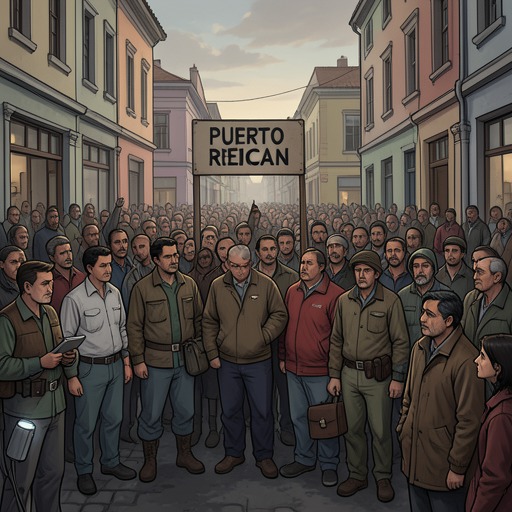
The West Side of Manhattan is described as densely populated, poor, and deteriorating. At night, gangs move through its basements, alleys, rooftops, and streets, as if the whole neighborhood becomes their hunting ground. The streets are not simply a backdrop to gang activity: they are the shared, contested spaces in which residents must live and the gangs assert their presence.
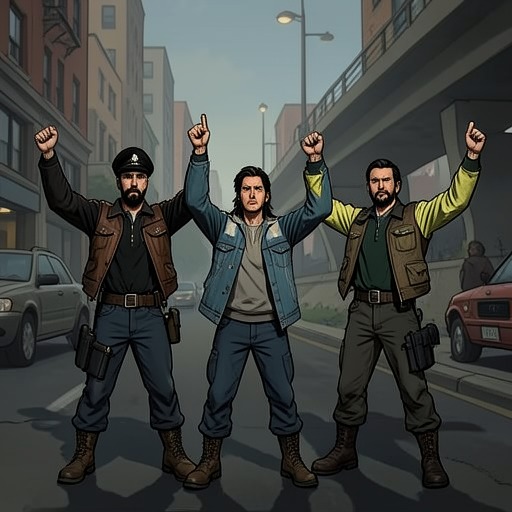
One warm night, people watch the Jets pass from windows and stoops. Only those who openly approve of the gang call out to them; others look away or hide behind a newspaper or handkerchief because the Jets mean trouble. The narrative measures the neighborhood's deprivation against basic necessities, presenting problems as more plentiful than air, light, or hope. The Jets then force cars to stop as they cross the street. When a driver tells them to hurry, Riff approaches with Action and Diesel behind him; the driver locks the doors and raises the window, while the gang spits on the glass and kicks the rear bumper before laughing and moving on. The encounter makes territorial power visible in an ordinary public space, and the car joins a long list of vehicles the Jets have harassed.
Housing and urban neglect
The residents' limited freedom to move is rooted in the housing market. Although World War II had ended twenty years earlier, ordinary people still found affordable housing expensive and scarce. When a white tenant left an apartment, a landlord could quickly re-rent it at a substantially higher price, so moving out did not necessarily offer an accessible route to a better home.
The account also describes landlords subdividing a three-room apartment into five, six, or even eight rooms, then packing in Puerto Rican tenants for profit. Such owners could spend much of their time in Florida or California without visiting either their buildings or tenants or maintaining halls, roofs, and walls. If a building collapsed, it could still be converted into a parking lot. These details connect overcrowding to deliberate extraction and neglect: the residents endure the conditions while owners collect the returns and leave the upkeep undone.
Territory, conflict, and community response
The Jets' claim to the neighborhood is presented through a history of fighting. In Riff's recollection, the gang had fought everyone to take possession of its block, and the scars carried by him and the other Jets served as evidence, in their eyes, that they had won and held it. Bernardo and the Sharks become the challengers to that claim. Riff interprets Bernardo's efforts to gather Puerto Ricans on his territory as an attempt to take control of the neighborhood, and fears that the white residents will be driven out. His account is openly prejudiced: the threat he imagines is bound up with hostility toward Puerto Ricans, not simply with a dispute over streets.
The conflict is not a single outbreak. For more than three weeks, the Jets have ambushed the Sharks, while the Sharks have refused to back down. Riff has had to fight his way from the entrance hall of his own building to the street, and a thrown paving stone has narrowly missed Bernardo. As the nightly fighting intensifies, Schrank and Krupke search for the gangs after dark. The Jets and Sharks know the maze of streets better than the police and hide in freight elevators, boxes on cellar shelves, and dark garbage bins beneath stairways. When the officers leave—sometimes at two, three, or four in the morning—the clashes resume, and daylight brings fresh injuries and tension.
The neighborhood's response to this violence is compromised. Even people who dislike the Jets are described as conceding that the gang helps preserve what remains of their neighborhood: at least, the boys do something, unlike politicians who speak from affluent districts. The narrative does not make the Jets' methods benign. Instead, it sets their coercive presence against residents' sense that politicians and other public voices have failed them. No West Side residents were consulted before Puerto Ricans were admitted to the country, the narration observes, and no newspaper speaks for the neighborhood; the Jets are described as the children who make themselves heard with voices and fists. This portrayal exposes both the residents' lack of political representation and the dangerous substitution of gang power for civic influence.
Public institutions and significance
A former church in the West Side becomes the Municipal Community Center after its congregation offers the building to the city. It had stood empty for nearly a year, with its windows an easy target, before the city accepted the gift and converted it. Clubs for boys, girls, and adults opened there, and the program aimed to draw young people away from the streets through supervised recreation and instruction. Its record is presented as neither an inspiring success nor a dramatic failure.
The center's open-door policy undermines its intended role as common ground. Once the neighborhood's older-established residents understand that Puerto Ricans are welcome, they avoid it, and their children are difficult to persuade to attend. Puerto Rican families also withdraw, unwilling to use a facility boycotted by the Italians. The center therefore reproduces the neighborhood's separation even as it is designed to offer an alternative to street life. Across these settings, Manhattan's West Side is defined by a sharp contrast: people share crowded buildings and public spaces, yet distrust and exclusion prevent those spaces from becoming common resources. With affordable housing, maintenance, political voice, and inclusive institutions all in short supply, territorial control gains force as a substitute for belonging and protection.